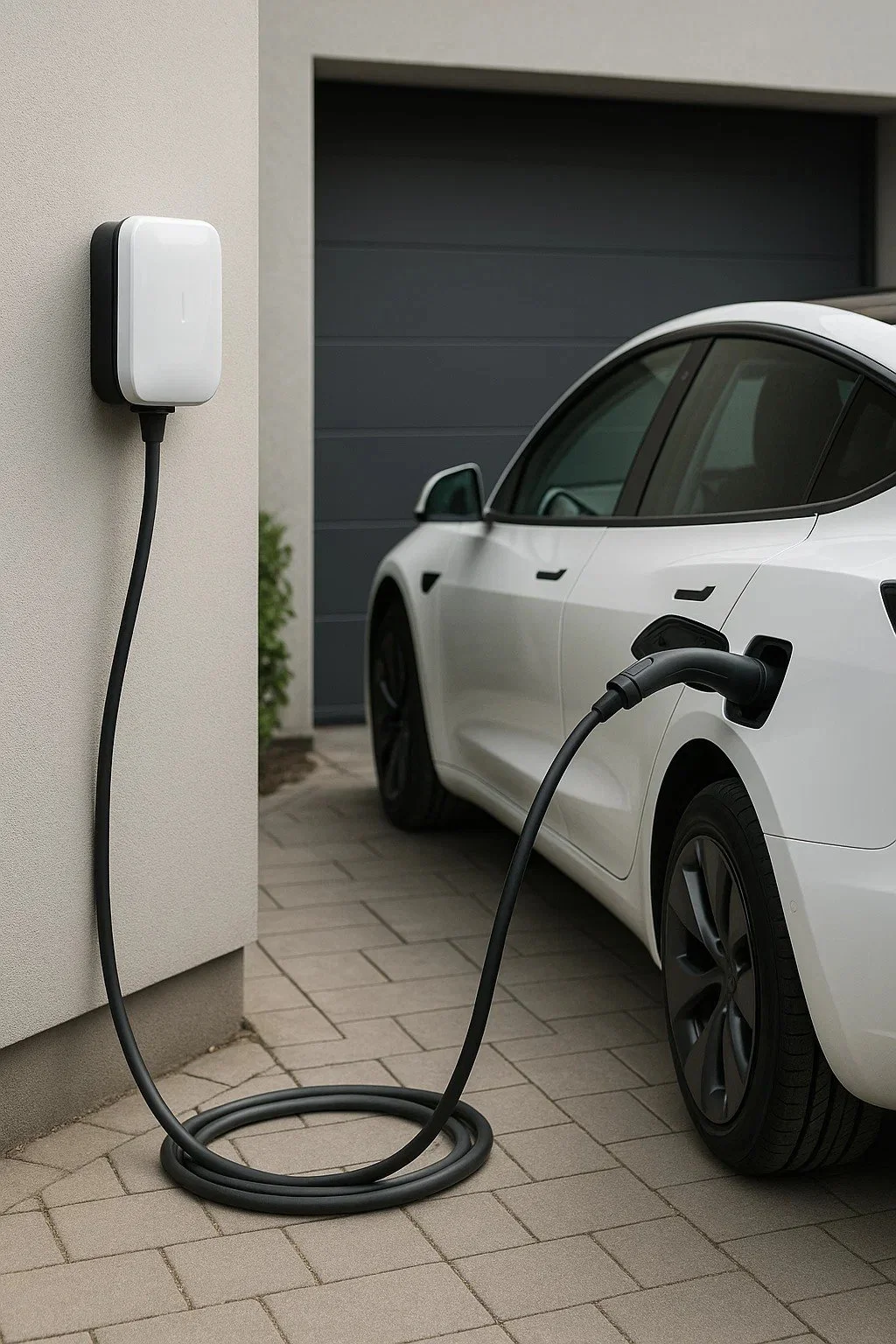
Max out your charge. Not your panel.
Any car. Any charger. Managed your way.
ChargeXcel lets an electrician add a 50 amp EV charger to an electrical panel that is already full, without a $4,000–$20,000 service upgrade or a 3–9 month utility wait. It watches your whole home’s power every second, balances Tesla charging automatically, and opens the door for any other car or charging station through scripts and plugins.
Think you need a panel or service upgrade? The calculator tells you in about a minute.
 Certified by CSA Groupto UL 916 Verify certification
- CSA certified to UL 916
- Built-in Tesla balancing
- Open script platform
- Net-Zero solar charging
- Signed, secure updates
- Your data stays on-site
- No service upgrade
The charger isn’t the expensive part. The service upgrade is.
When an electrician finds no room in your panel for a Level 2 charger, the usual answer is a bigger electrical service. That can mean utility coordination, trenching, a new panel, and months of waiting. These are real quotes homeowners received.
It doesn’t have to end the project. In a qualifying home, ChargeXcel manages the capacity you already have, so a licensed electrician can add fast charging without the upgrade.
- Service upgrade quote$5,000Overhead service work
- Service upgrade quote$30,000Underground service work
- Service upgrade quote$8,500Overhead service + panel
- Service upgrade quote$20,000Utility trenching
- Service upgrade quote$25,000Total service project
- Utility schedule9 monthsTypical utility wait
Power that thinks before it charges.
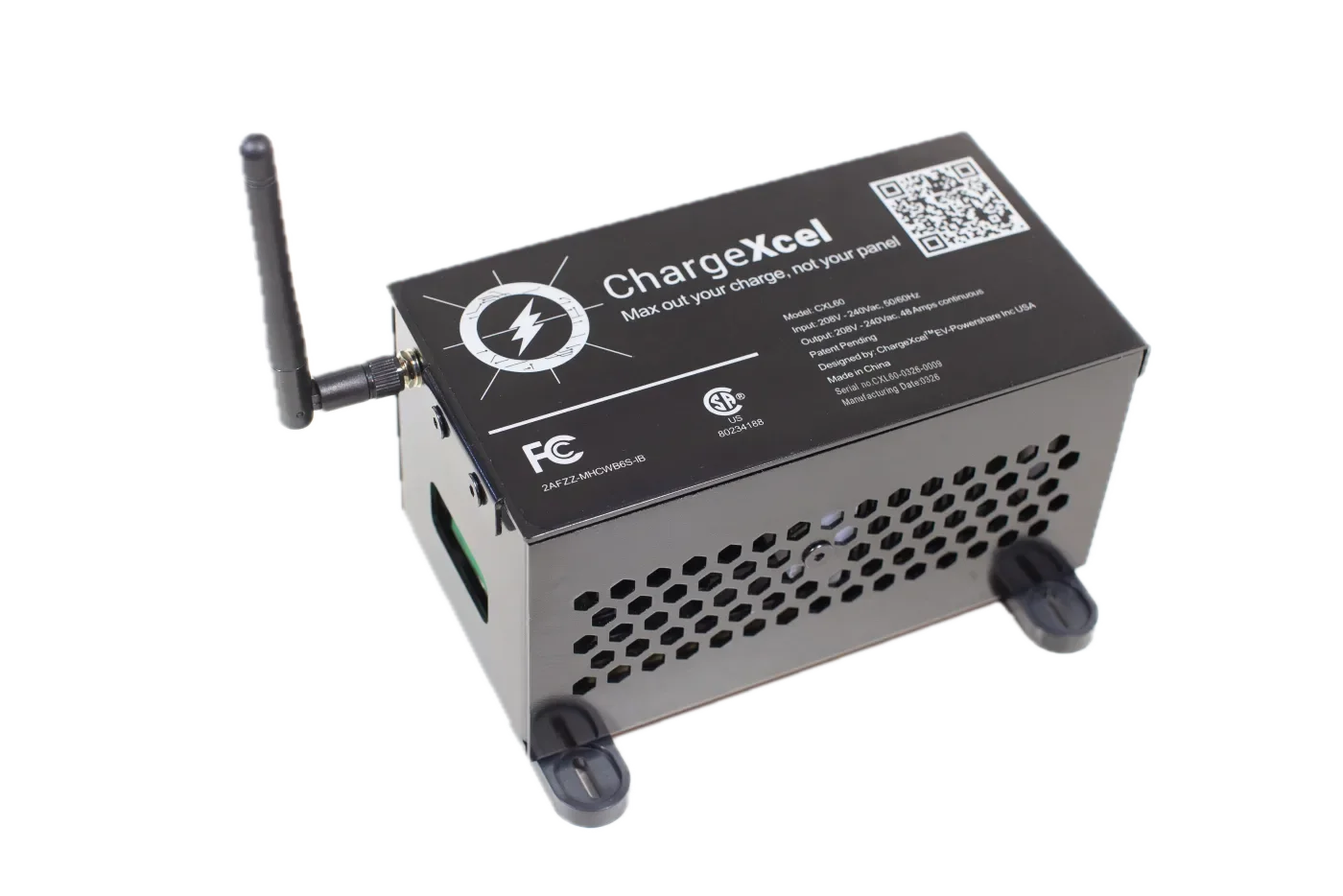
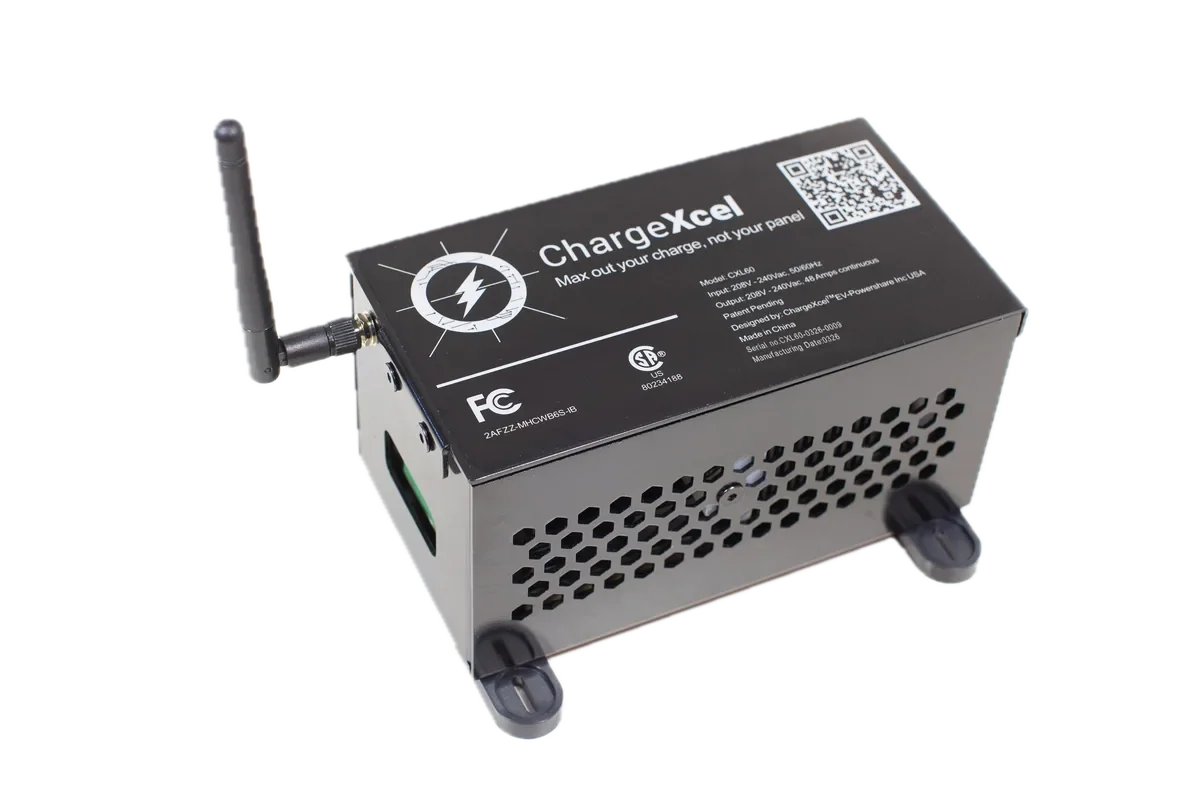
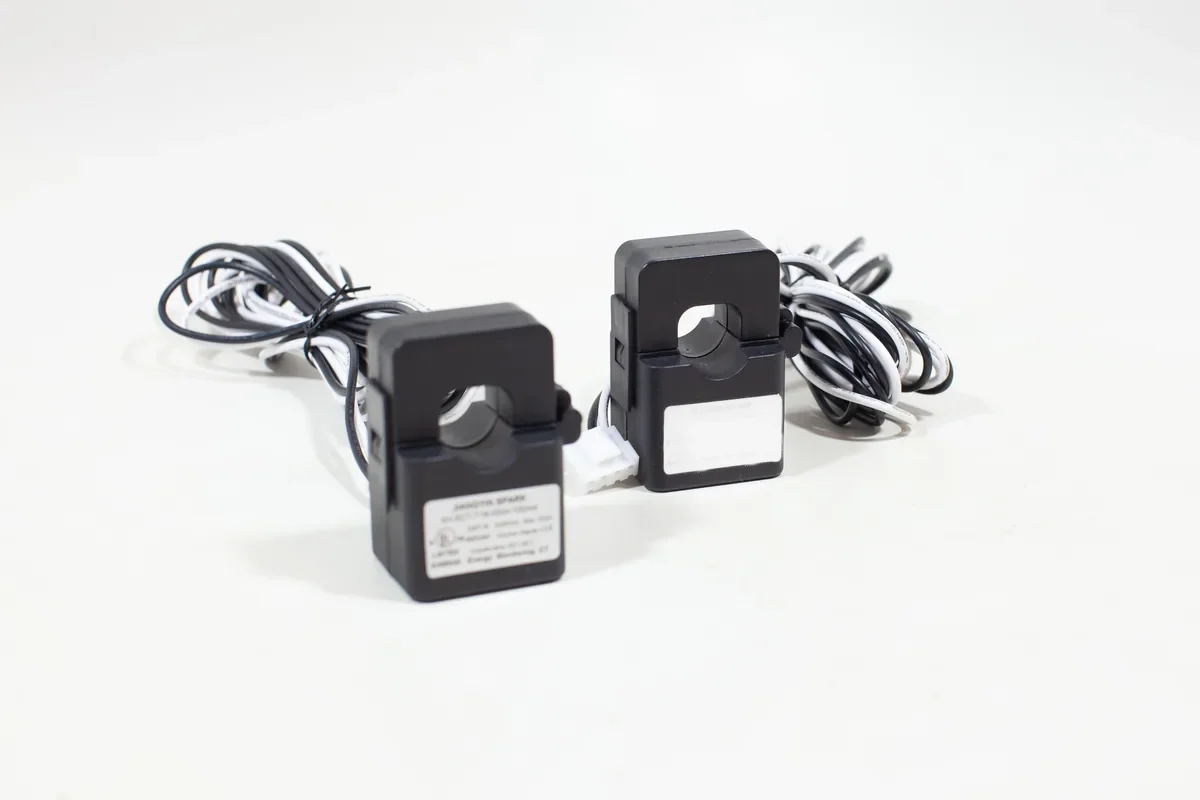
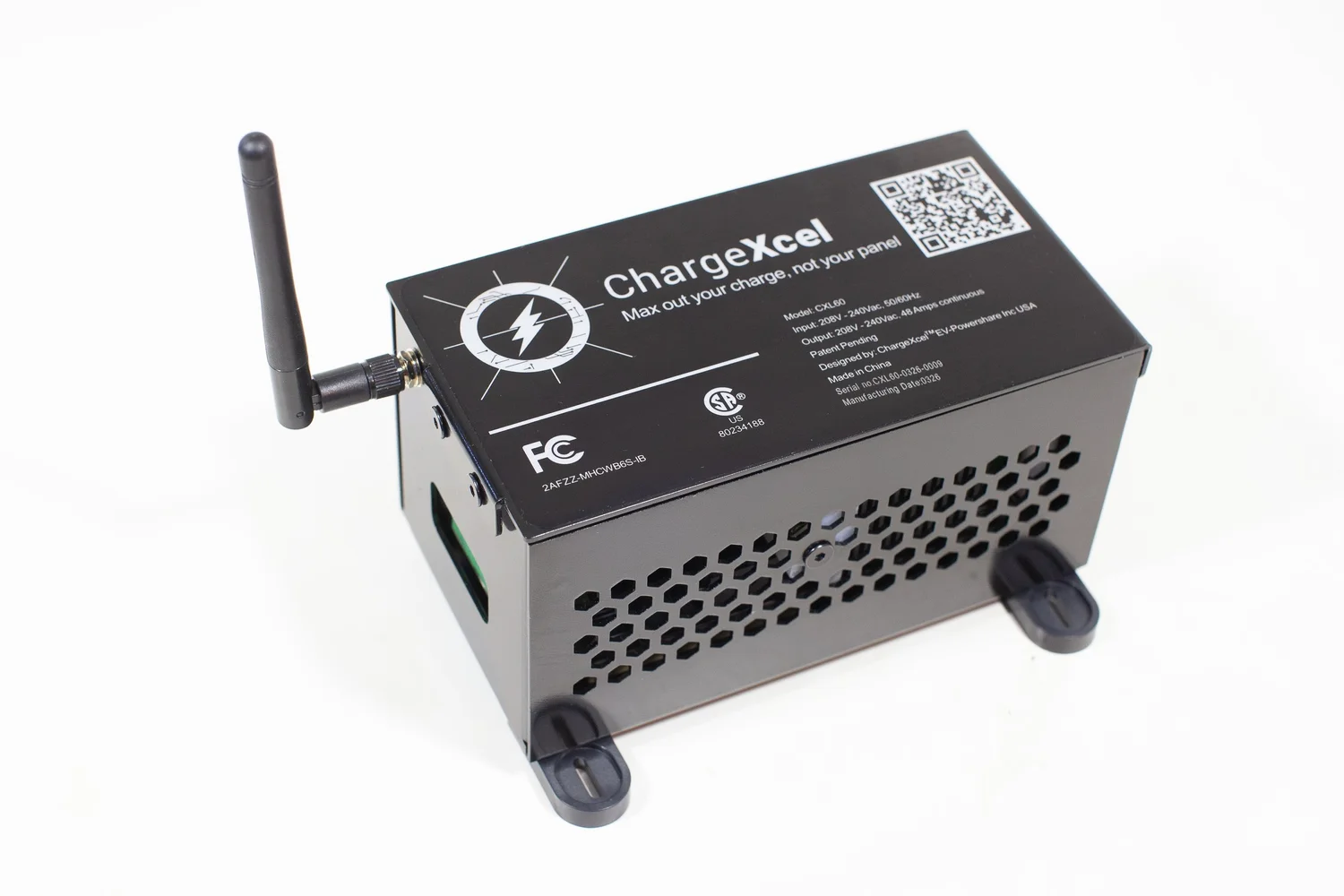
ChargeXcel is a load management system that sits next to your electrical panel. Two current sensors clamp around your home’s main service lines and a third watches the charger circuit. Four times a second it works out how much capacity is left, and your car gets whatever the house isn’t using.
Live demand · 100 A service example
The car slows down while the house is busy
When ChargeXcel can talk to your car or charger (built in for Tesla, and through a script or plugin for others), it turns the charge rate down during a peak and back up the moment the peak passes.
A certified hard stop for any charger
If the home still climbs toward its limit, ChargeXcel opens its own relay and cuts the charger circuit before your main breaker can trip. Power comes back automatically when it is safe. This works with every Level 2 charging station, with no app or account.
Typical service‑upgrade cost avoided
Charger added to a fully‑loaded panel
Safety checks of your whole service, every second
Cloud accounts needed for load shedding
Choose the car and charging station you want. ChargeXcel works around them.
Most load managers only work with one brand of charger. ChargeXcel measures your electrical service itself, so it protects any Level 2 charging station. It also publishes its live spare capacity, so the equipment you own can use every amp that’s free. Pick the path that fits, and change it later from the unit’s own web page.
ChargeXcel publishes your spare capacityMeasured from the whole service, updated every second (example reading)
34.0A spare
Any Level 2 charging station
Certified load shedding needs no setup. ChargeXcel opens its relay before your service is overdrawn and closes it again when the peak passes. Works with any Level 2 charger up to 60 A.
Tesla, balanced in real time
ChargeXcel sets your Tesla’s charging amps directly through Tesla’s own service, sliding the rate up and down with the house. Your Tesla login stays on your unit. Our servers keep no Tesla data.
Cloud-connected cars & chargers
Paste a short Berry script and ChargeXcel talks to your car or charger maker’s cloud service itself. It can adjust or pause charging, depending on what that service allows. Proven with Smartcar and Epic Charging.
OCPP chargers, batteries & smart homes
A plugin on a Raspberry Pi or home server reads ChargeXcel’s live headroom over your home network and drives your equipment in its own language, such as OCPP. No cloud in the loop.
No plugin can override the safety limit.
Scripts and plugins only read ChargeXcel’s numbers. Nothing they send back can raise a limit or close the relay. If a script crashes or the internet goes down, ChargeXcel keeps protecting your service from its own sensors.
Write the rule. ChargeXcel runs it.
ChargeXcel has a small script engine built in. Scripts are written in Berry, a lightweight language that reads a lot like Python. A script runs on the unit itself, reads the spare capacity on a timer, and tells your car or charging station what to draw through its maker’s online service. You don’t need an extra computer.
- Choose “My own script”On the unit’s Load Management page, under “What controls the car?”.
- Paste a script and add your API keyKeys are stored on the unit and never shown again, so they never sit in the script.
- Press Install and runThe page shows each run, its latest message, and any error with the line number.
# Every minute, give my charger whatever the house can spare.
interval = 60
import json

def tick()
  var t = dlm.telemetry()
  if !t['allowed_amps_valid'] return end

  var kw = t['allowed_amps'] * 240 / 1000.0
  var r = dlm.http("PATCH", "https://api.example.com/charger/1",
    {"Authorization": "Bearer " + dlm.secret("api_key")},
    json.dump({"limit_kw": kw}))

  dlm.report(r[0] == 200, "limit " + str(kw) + " kW")
endCharge on sunshine.
If you have solar panels, turn on Net-Zero charging and ChargeXcel steers your car toward the power your roof would otherwise send back to the grid. It uses the sensors ChargeXcel already has, so there is no extra meter to install. You choose the hours it runs; outside them, charging works as normal.
Charging never stops. When the sun is weak or a cloud passes, the car takes a little from the grid to keep its 6 A minimum, then goes back to spare solar.
Needs solar recorded in your electrician’s setup, and a car or charger ChargeXcel can adjust (a Tesla on the built-in connector, or a script). It can’t see surplus that a home battery or a zero-export inverter soaks up first. Net-Zero only ever lowers what the car is offered; your service protection is unchanged.
A sunny day, 9:00–16:00 window
IllustrationSmall box. Serious hardware.
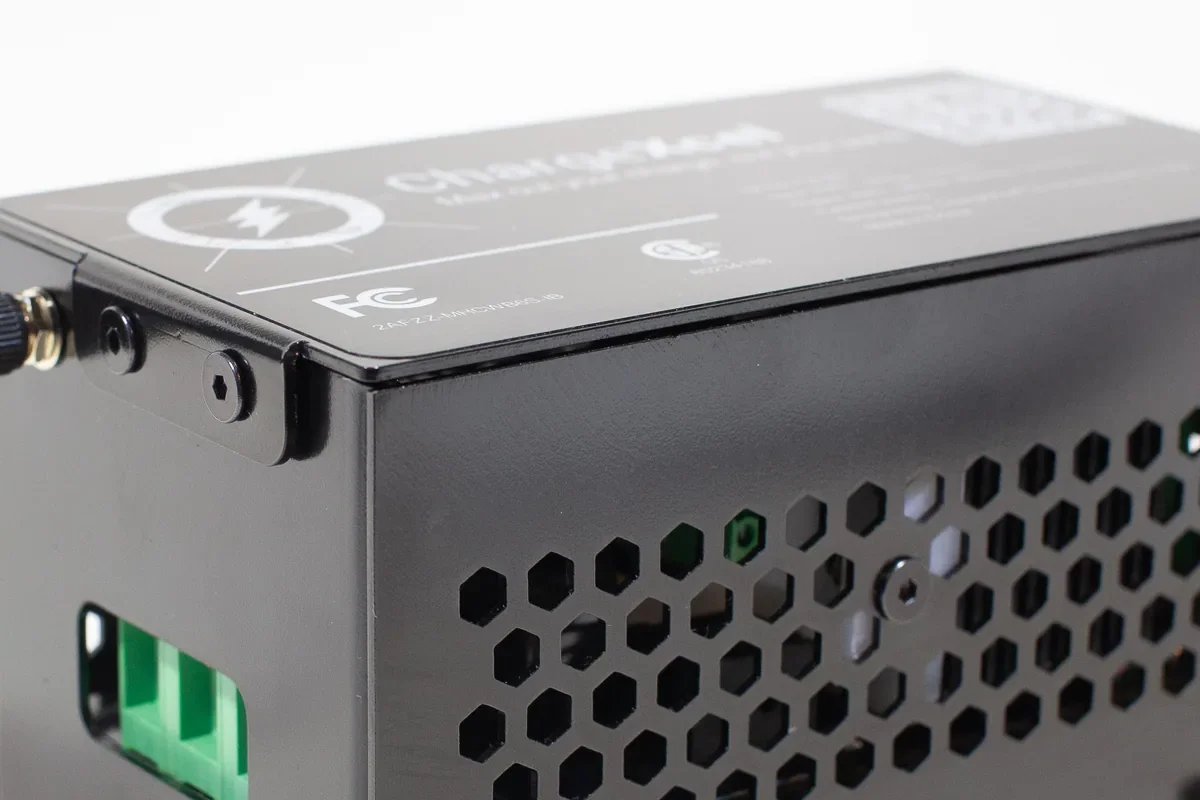
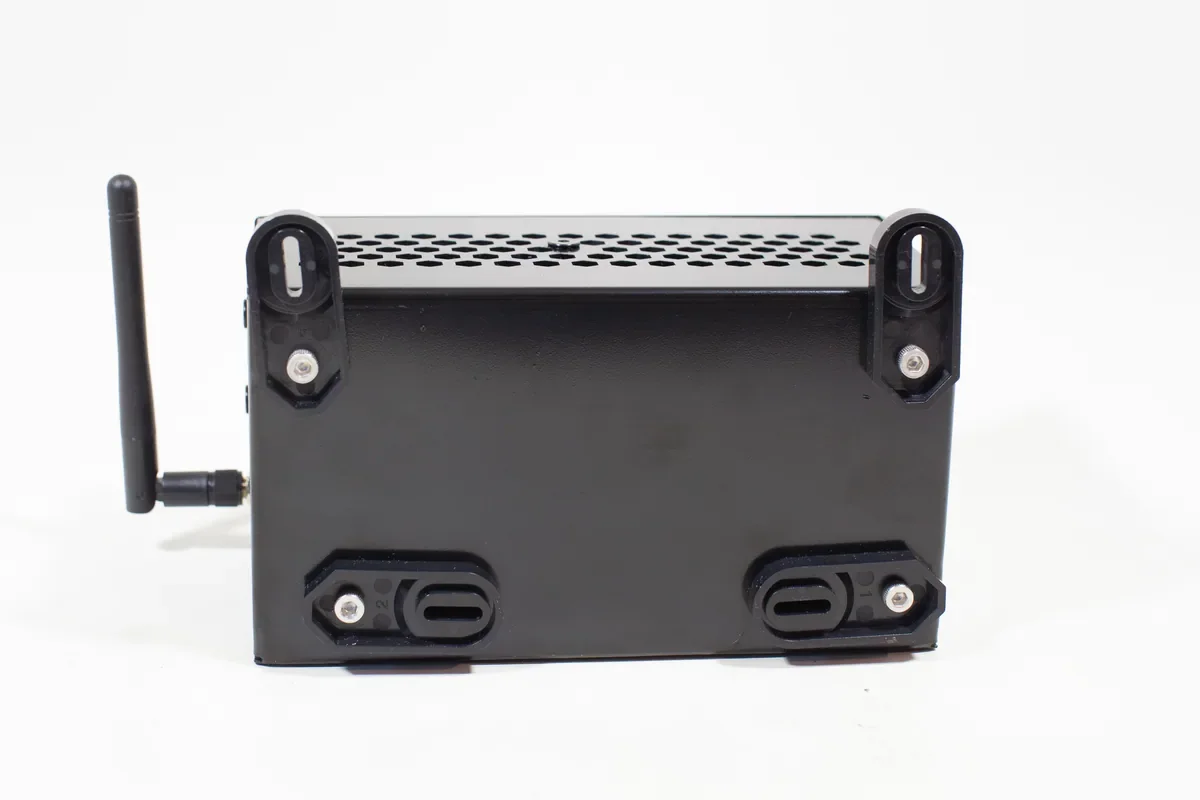
One compact unit mounts next to your panel. A qualified electrician typically installs it in one to two hours, and you set it up from your phone. There are no DIP switches.
- Voltage
- 208–240 V AC, single phase
- Continuous
- 48 A
- Maximum load
- 60 A
- Power
- 14.4 kW max
- Wiring
- L1, L2 & earth, no neutral
- Certification
- CSA to UL 916
Engineered to excel.
Save thousands, charge faster.
Skip the service upgrade, keep the car you love, and charge at full speed whenever the house has room to spare.
Win more jobs.
Add a 240 V / 50 A circuit to a full panel with a code-recognized design. Turn a $20K objection into a one-afternoon install.
Certified & code-aligned.
Certified by CSA Group to UL 916, and designed around the energy-management provisions of NEC 220.70 and 625.42(A).
Your data stays home.
Energy readings and history live on the unit, not in our cloud. When ChargeXcel talks to your car, it talks to the car maker directly.
See where every kilowatt-hour went.
Compare what the house and the car used by day, week, month or year. Over two years of history is kept on the unit, and you can download it as a spreadsheet.
Signed, secure updates.
New features arrive over Wi-Fi. Every update is digitally signed, and a unit refuses any firmware that didn’t come from us.
Why an EV energy management system removes the need for costly upgrades.
Before installing an EV charger, an electrician checks whether your home’s service has room for the charger and your existing loads. If the calculation comes up short, the traditional fix is a larger panel or utility service.
A certified EV Energy Management System is another code-recognized option. ChargeXcel continuously protects the service limit by reducing or pausing EV charging whenever the home needs more power. NEC 220.70 and 625.42(A) allow this managed approach in the installation design, which can remove the need for an upgrade when approved by the electrician and the local authority.
Worry‑free, high‑speed charging.
Built for safety, performance and reliability. Choose the car and charger you want, and let ChargeXcel make them fit your home.
Homeowners: learn moreBecome the go‑to EV expert.
Fewer permits, no utility delays, no lost leads, and a simple install. Partner with ChargeXcel and keep the jobs you used to lose.
Partner with usFrequently asked questions
Still unsure whether ChargeXcel fits your home? The gives you an estimate in about a minute.
Does ChargeXcel work with my car?
Yes. Load shedding works with every electric car, because ChargeXcel manages the charging circuit, not the car. For real-time balancing, Tesla is built in: ChargeXcel sets your Tesla's charging amps directly. Other cars can be balanced through an on-device script or a local plugin when the car or charger maker offers an online service to talk to. Smartcar and Epic Charging scripts have already been proven.
Which EV chargers does it support?
Any Level 2 charging station up to 60 A (48 A continuous) on 208 or 240 volts. Chargers with an online service or OCPP support can also be adjusted in real time through a script or a local plugin.
What is a Berry script, and do I have to write code?
Berry is a small programming language that reads a lot like Python. ChargeXcel can run one Berry script at a time, on the unit itself, to talk to your car or charger maker's online service. You don't have to write one. Example scripts are published free on GitHub, and you only paste one in and add your API key. Developers can test scripts on their own computer first with the free cxl-run tool.
Can a script or plugin make my electrical panel unsafe?
No. Scripts and plugins can only read ChargeXcel's numbers. Nothing they send back can raise a limit or close the relay. If a script fails or the internet goes down, ChargeXcel keeps protecting your service from its own current sensors.
How does Net-Zero solar charging work?
If you have solar panels, Net-Zero charging steers your car toward the power your roof would otherwise export to the grid. In Minimum + solar mode the car always gets at least 6 A plus any spare solar. In Solar only mode it charges only on surplus, and pauses when there isn't enough. You choose the daylight hours it runs. It needs a car or charger ChargeXcel can adjust, such as a Tesla on the built-in connector or a script. It can't see surplus that a home battery or a zero-export inverter absorbs first.
Does my data go to the cloud?
Your energy readings and history are stored on the ChargeXcel unit in your home, and you can download them as a spreadsheet. When ChargeXcel adjusts your car, it connects directly to your car or charger maker. EV PowerShare's servers keep no Tesla data.
Will I still need a service upgrade?
In many homes, no. NEC 220.70 and 625.42(A) let an electrician count a certified energy management system in the load calculation, which can remove the need for a larger service. Final approval rests with your electrician and your local authority. Try the cost calculator on this page for an estimate in about a minute.
How is ChargeXcel installed?
A licensed electrician mounts the unit near your main panel, clamps the current sensors around the service lines and wires the charger circuit through it (L1, L2 and earth, no neutral). Installation typically takes one to two hours, and setup is done from a phone. Updates arrive over Wi-Fi and are digitally signed.
Find out in 60 seconds.
See whether your panel needs an upgrade, and how much ChargeXcel could save you.
Our mission at EV PowerShare is to promote clean and sustainable transportation through quality smart charging and energy management solutions.
About EV PowerShareContact Us